Call Today
(858) 269 - 7035


It’s a question that keeps many parents up at night. You scroll through parenting forums and find two loud camps. One side says daycare builds confident, social kids. The other side warns about stress, germs and too much time away from home. You just want an honest answer.
Here it is: daycare is neither good nor bad on its own. The outcome depends on the quality of care, your toddler’s temperament and how well the setting fits your family. A warm, well-run child daycare and preschool center can support healthy growth, while a poor fit can make things harder.
So, Is Daycare Good or Bad for Toddlers? This guide walks you through the real benefits, the honest concerns and the signs that show whether daycare is working for your child.
The toddler years bring huge changes. Between ages one and three, children learn to walk, talk, share and handle big feelings. Parents naturally worry that time away from home might disrupt this growth.
Cultural messages add pressure too. Some parents feel guilty for working, while others feel judged for staying home. Mixed advice from family, friends and the internet only adds to the confusion.
Research on early child care offers a calmer picture. Studies over many years show that the quality of care matters far more than the type of care. Warm, responsive caregivers, safe spaces and steady routines help toddlers thrive, whether care happens at home or in a group setting.
Toddlers learn social skills by doing, not by being told. In group care, they practice sharing, waiting for a turn and joining play every day. Caregivers coach them through small conflicts with simple words. Over time, children learn to read other kids’ feelings and build early friendships.
Toddlers in a quality program hear songs, stories and conversation all day long. Caregivers name objects, ask questions and respond to every attempt to talk. Many parents notice a burst of new words after their child settles into daycare. Peers also play a role, because toddlers copy each other’s words and sounds.
A predictable day helps toddlers feel safe. They learn that snack follows play, and nap follows lunch. That rhythm lowers stress and teaches self-control. Toddlers also practice washing hands, putting away toys and feeding themselves. Each small task builds the “I can do it” confidence that serves them well later.
Good daycare does not push flashcards on toddlers. Instead, caregivers set up play that teaches. Stacking blocks builds early math. Painting strengthens hand muscles for future writing. Pretend play grows imagination and language. A quality child daycare and preschool center plans these activities with clear goals, even when they look like simple fun.
Daycare is not perfect, and good programs talk openly about the challenges. Knowing them helps you make a balanced decision.
| Concern | What Is Really Happening | How to Reduce It |
|---|---|---|
| Frequent colds | Toddlers meet new germs in group settings, especially in the first year | Choose a program with strong hand-washing and clear sick policies |
| Drop-off tears | Separation anxiety is a normal stage of toddler development | Use a short, loving goodbye routine every day |
| Long hours in care | Some research links very long days in group care to more behavior challenges, though effects tend to be small | Keep days reasonable when possible, and protect family time at home |
| Less one-on-one time | Caregivers share attention among several children | Look for small groups and low adult-to-child ratios |
| Caregiver turnover | Frequent staff changes can unsettle toddlers | Ask how long caregivers have stayed with the program |
The key takeaway is simple. Most concerns are manageable, and many shrink once your toddler settles in. The quality of the program makes the biggest difference.
Watch how caregivers talk to toddlers. Do they kneel to eye level, use gentle voices and respond quickly when a child cries? Warmth is the single most important sign of quality. Toddlers who feel safe with their caregivers explore, play and learn more freely.
Toddlers bond best with familiar adults. Ask about group sizes, adult-to-child ratios and how long caregivers have worked at the program. A child daycare and preschool service in San Diego with low turnover gives toddlers the stable relationships they need to feel secure.
A good program treats parents as partners. Caregivers share daily notes about meals, naps, moods and milestones. They also welcome your questions and concerns. When you search for a child daycare and preschool center near me, ask how the team communicates and how often they talk with families about progress.
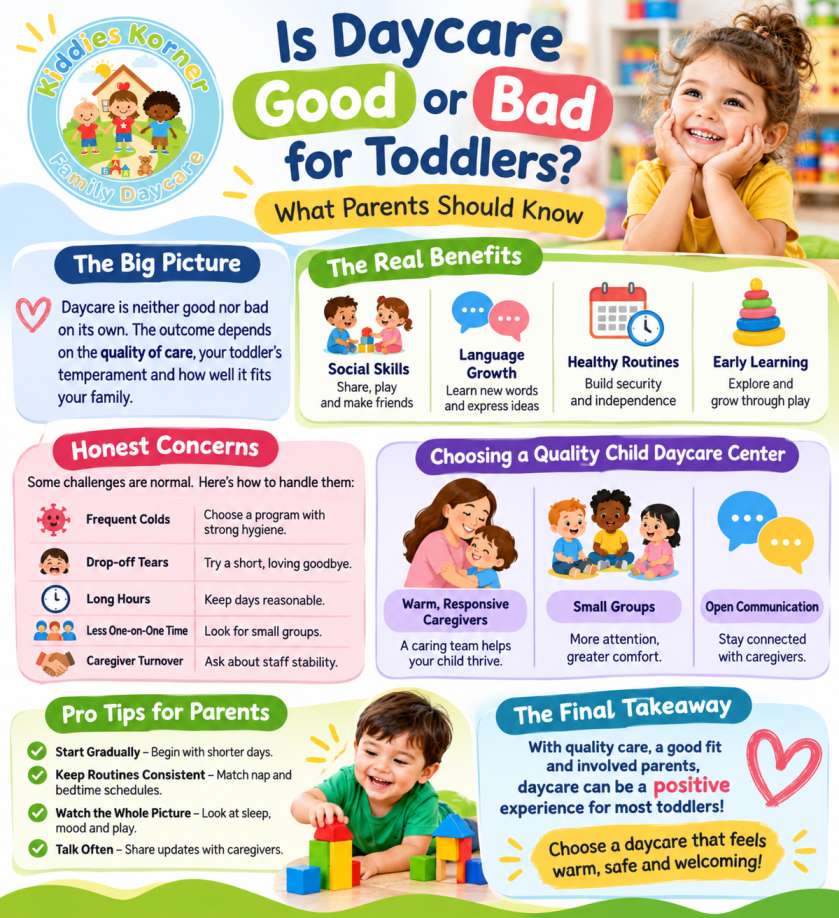
So, Is Daycare Good or Bad for Toddlers? The honest answer is that quality care, a good fit and involved parents make daycare a positive experience for most toddlers. Watch your child, ask questions and trust what you see.
The right child daycare and preschool center feels warm, safe and welcoming the moment you walk in. It partners with you and helps your toddler grow at their own pace.
If you are looking for a caring child daycare and preschool center near me, Kiddies Korner Family Daycare welcomes families to visit, meet our caregivers and see our daily routine. At Kiddies Korner Family Daycare, we believe every toddler deserves a warm, family-style start.
There is no single perfect age, because every child and family is different. Many toddlers adjust well between 18 months and three years, when they show interest in other children and can handle short separations. Younger toddlers can also thrive with warm, consistent caregivers and small groups. Focus on your child’s temperament, your family’s needs and the quality of care rather than a specific age on the calendar.
Look for signs at home and at pick-up. A toddler who is adjusting well usually eats and sleeps normally, talks about friends or caregivers and shows new words or skills. Some tiredness and fussiness are normal early on. However, if your child seems withdrawn, fearful or unhappy for many weeks, talk openly with caregivers about what they see and consider whether the setting fits your child.
No. Research and everyday experience both show that toddlers keep their strongest bond with their parents. Children can love and trust several caring adults at once without losing that connection. In fact, many parents find their reunions at pick-up become special moments. Spend focused time together in the evenings and on weekends through reading, play and cuddles to keep your bond strong.
The right amount depends on your family’s schedule and your child’s needs. Many toddlers handle full days well when care is warm and routines are steady. If possible, avoid very long days for young toddlers, and protect calm family time at home. A child daycare and preschool service in San Diego can help you plan a schedule that suits your toddler as they settle in.
Start with warmth. Watch how caregivers speak to toddlers and respond to tears. Ask about group sizes, staff training, daily routines, sick policies and parent communication. Visit during active play, not only nap time. A good program welcomes questions, shares clear written policies and makes you feel like a partner in your child’s care, not just a customer.
Design & Developed by Alpha Business Designs