Call Today
(858) 269 - 7035


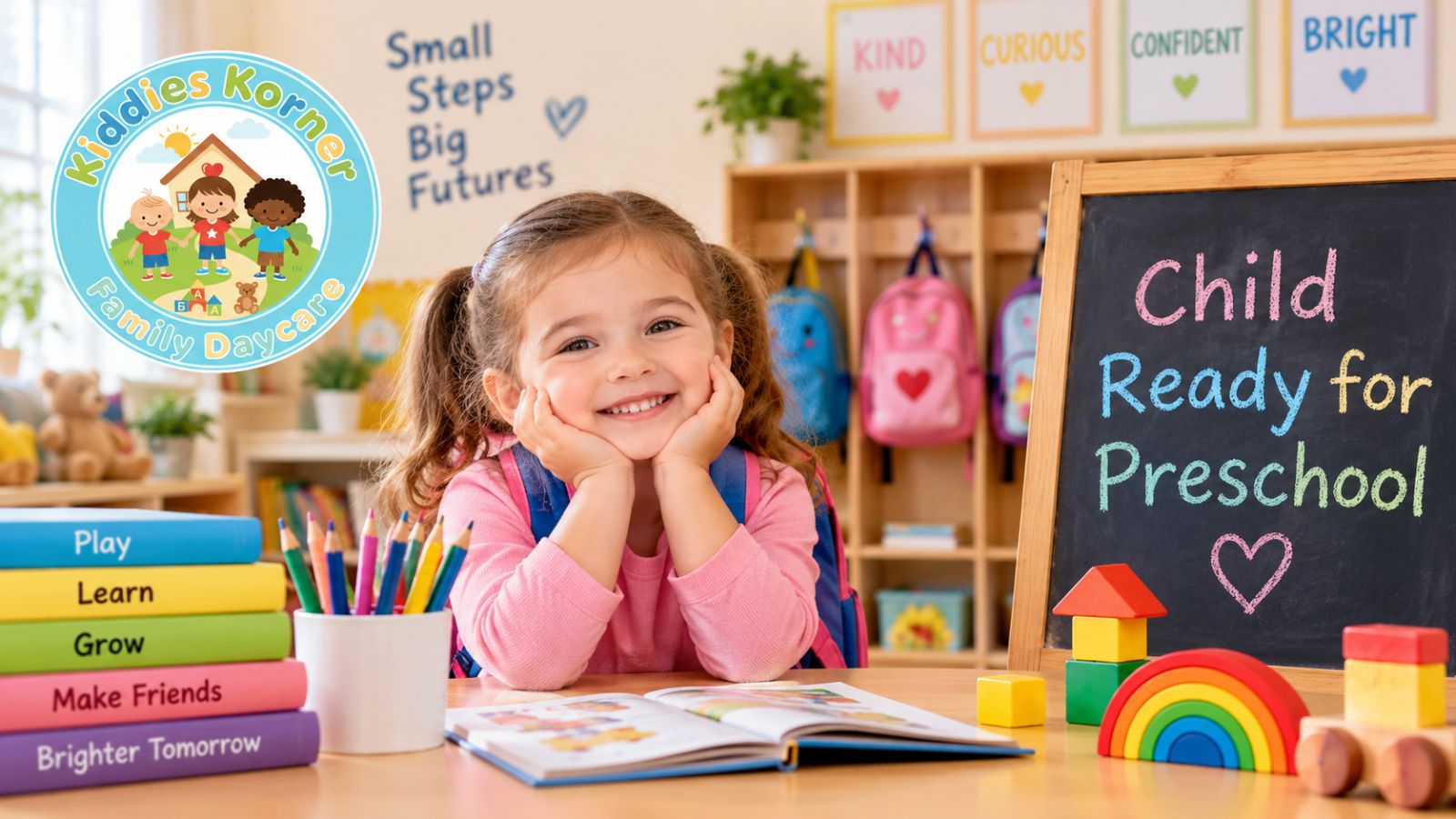
Choosing the right time to start preschool can feel like a bigger decision than it first appears. Parents often wonder whether their child can manage separation, communicate needs, follow routines, interact with other children, and participate in group activities. The good news is that preschools for children are designed to support development rather than require every child to arrive with the same skills. California’s early-learning guidance recognises that children develop across social-emotional, language, cognitive, physical, and other areas at different rates.
Being Child Ready for Preschool does not mean being able to read independently, count to a particular number, sit perfectly still, or never become upset at drop-off. Preschool readiness is better understood as a combination of emerging developmental skills, curiosity, communication, independence, and the ability to participate in a group environment with appropriate adult support.
California’s Preschool/Transitional Kindergarten Learning Foundations describe learning and development for children roughly three to five and a half years old across multiple domains. These include approaches to learning, social and emotional development, language and literacy, mathematics, science, physical development, health, history-social science, and visual and performing arts.
That matters because readiness is not a single test. A child may be confident socially but still need help with toileting. Another may have strong language skills but become upset when separating from a parent. These differences do not automatically mean a child is unprepared. Instead, they can help parents understand what support may be useful during the transition.
One of the most noticeable signs of preschool readiness is a child’s growing ability to spend time away from their primary caregiver. This does not mean your child must walk into a classroom without tears. Separation can still be emotional, particularly during the first few days or weeks.
What matters is whether the child can gradually settle with a trusted adult after the goodbye. The CDC notes that, by age three, a common developmental milestone is calming within about 10 minutes after a caregiver leaves. However, developmental milestones are not a substitute for individual developmental screening or professional advice.
Parents can practise short separations before enrolment. A child might spend time with a grandparent, trusted family friend, or caregiver while the parent remains away briefly. Consistent goodbye routines can also help. The American Academy of Pediatrics recommends keeping goodbye rituals brief and consistent and practising separation before childcare or preschool begins.
The goal is not to eliminate every tear. It is to help the child learn that a parent can leave, another trusted adult can provide care, and the parent will return as promised.
Preschool involves regular opportunities to interact with peers. A child does not need advanced sharing skills or perfect cooperation before starting. However, an interest in watching, approaching, talking to, or playing alongside other children can be a useful sign of emerging social readiness.
At this age, children are still learning how to negotiate turns, handle frustration, express preferences, and resolve small disagreements. Adults play an important role in modelling these behaviours. California’s early-learning guidance specifically includes peer interactions, group participation, cooperation, responsibility, friendships, and relationships within social-emotional development.
It is normal for young children to spend considerable time playing beside rather than directly with other children. Over time, they may begin joining shared activities and responding to peers. Parents can support this development through playdates, library activities, playground visits, and simple games involving taking turns.
A child who occasionally struggles to share a favourite toy is not necessarily unready for preschool. What matters more is whether the child is beginning to learn social routines with guidance.
Children do not need advanced vocabulary before entering preschool. They do benefit from being able to communicate basic needs, respond to simple questions, understand familiar instructions, and express feelings or preferences in a way familiar adults can generally understand.
The CDC’s three-year milestones include engaging in back-and-forth conversation, asking questions, saying their first name when asked, and being understandable most of the time. These are developmental reference points rather than admission requirements.
Parents can strengthen communication naturally through conversations during meals, walks, bath time, shopping, and play. Instead of turning every interaction into a lesson, describe what you are doing, ask open-ended questions, listen carefully, and give your child time to answer.
Reading together is particularly useful. Ask what a character might be doing, what could happen next, or how someone in the story might feel. These conversations build vocabulary, listening, comprehension, and confidence without making learning feel like formal work.
Preschool environments typically involve predictable sequences. Children may arrive, put belongings away, wash their hands, participate in an activity, eat a snack, play outdoors, rest, and transition between activities.
A child who can follow one- or two-step directions with support may find these routines easier to understand. The CDC recommends giving three-year-olds instructions involving two or three steps as an age-appropriate way to support development.
Parents can introduce simple routines without making home feel like a classroom. For example, a morning sequence might involve getting dressed, putting pyjamas away, eating breakfast, brushing teeth, and choosing shoes. Visual reminders can help some children understand what comes next.
The objective is independence, not perfection. Preschool teachers expect young children to need reminders, encouragement, demonstrations, and repeated practice.
Self-help abilities can make the preschool transition easier. Depending on age and individual development, these may include attempting to put on shoes, washing hands, using utensils, drinking from a cup, putting toys away, and communicating when help is needed.
Toileting is another consideration, but parents should check the individual requirements of the programme rather than making assumptions. Different early-learning settings may have different policies and levels of support.
Give your child opportunities to attempt everyday tasks before immediately stepping in. They may put their shirt on backwards or take longer to pack away toys, but those attempts provide valuable practice.
A practical approach is to offer manageable choices. Ask whether they want the blue or red cup, encourage them to place their shoes in the same location, or let them help pack a small bag. These ordinary moments build confidence and responsibility.
Young children naturally have limited attention spans, so expecting a preschooler to sit quietly for a long lesson is unrealistic. Preschool learning is often active, playful, and integrated across different developmental areas. California’s guidance emphasises purposeful teaching alongside active and playful exploration.
A child may demonstrate readiness by listening to a short story, joining a song, completing a simple puzzle, participating in a craft, or staying with an activity for a developmentally appropriate period.
Play is not separate from learning. Children can practise language while pretending, mathematics while sorting objects, physical coordination while climbing, and social skills while playing cooperatively. High-quality early-learning environments use play and purposeful interactions to support development.
Parents should therefore look beyond worksheets when evaluating toddler and preschool programs. Ask how children learn throughout the day and whether activities encourage curiosity, movement, communication, problem-solving, creativity, and relationships.
A child does not need to manage emotions independently before preschool. Emotional regulation is a skill that continues developing throughout early childhood. However, it can help if the child is beginning to communicate simple feelings such as being tired, hungry, worried, angry, or uncomfortable.
They may say, “I need help,” point to something they want, seek comfort from a familiar adult, or begin recognising basic emotions in themselves and others. These emerging skills can support communication with teachers and caregivers.
Parents can name emotions without judging them. Saying, “You are frustrated because the blocks fell down,” gives the child language for an experience. Adults can then model practical strategies such as taking a breath, asking for help, moving to a quiet space, or trying again.
The California foundations identify self-awareness, self-regulation, social and emotional understanding, empathy, cooperation, and relationships as important areas of early development.
Curiosity is one of the most valuable qualities a child can bring into an early-learning environment. A preschooler may constantly ask questions, investigate objects, create pretend scenarios, experiment with water and sand, draw pictures, build towers, or become fascinated by insects outside.
These behaviours show that children are naturally learning through their environment. They do not need to arrive knowing everything. In fact, a strong preschool environment should provide opportunities for children to explore, ask questions, make mistakes, and discover new ideas.
Parents sometimes compare their child’s development with another child’s. This can create unnecessary pressure because development does not happen at exactly the same pace for every child. California’s preschool foundations are intended to guide expectations and support learning, not function as a pass-or-fail assessment.
The more useful question is whether your child is continuing to develop and whether the environment you are considering can support their individual needs.
Once parents feel their child may be ready, the next step is finding an environment that matches the child’s personality, developmental needs, family schedule, and expectations. Families researching toddler and preschool programs in san diego can compare several practical factors rather than relying only on photographs or online reviews.
Look at how adults interact with children. Are teachers attentive and respectful? Do children have opportunities for indoor and outdoor play? Is there a clear daily routine? How are meals, naps, toileting, transitions, and behaviour handled? Parents should also ask how the programme communicates with families.
A preschool tour is an opportunity to observe rather than simply listen to a sales presentation. Notice whether children appear engaged, whether adults get down to the child’s level, and whether the environment looks organised and age-appropriate.
Useful questions include:
Families comparing the best preschools in San Diego should consider these practical details alongside location, schedule, cost, licensing information, and the overall fit for their child.
Good early education is not simply about getting children ready for academic work. It should support the whole child. California’s current preschool and transitional kindergarten foundations recognise multiple developmental domains, including social-emotional development, approaches to learning, language and literacy, mathematics, science, physical development, health, history-social science, and visual and performing arts.
For families looking at preschools for kids near San Diego, this broader perspective is useful. A programme should provide age-appropriate experiences that encourage children to communicate, move, explore, create, cooperate, solve problems, and build relationships.
One common misconception is that a child must be academically advanced before starting preschool. In reality, preschool itself is an environment in which children develop many foundational skills. Another misconception is that crying at drop-off means a child is not ready. Separation can be difficult even when a child eventually settles comfortably into the classroom.
It is also a mistake to compare children too closely. One child may speak early while another develops stronger physical coordination first. Development is multidimensional. If parents have concerns about speech, behaviour, movement, hearing, social interaction, or another area, discussing those concerns with the child’s paediatrician or an appropriate developmental professional can provide more useful guidance than comparing them with peers.
Preparation does not require a formal preschool curriculum at home. Instead, focus on everyday experiences that build independence and confidence. Practise putting belongings away, washing hands, opening simple food containers, following short instructions, listening to stories, and taking turns during games.
Create predictable routines around waking, meals, play, and bedtime. Visit a playground or library where your child can see other children participating in group activities. Read books about starting school and talk positively about what might happen during the day.
Most importantly, give your child time. Some children become enthusiastic immediately, while others need several weeks to become comfortable with a new setting.
A gradual transition is often easier than treating the first day as a completely unfamiliar event. If possible, visit the setting before the start date. Let your child see the room, meet the caregiver, and understand where they will keep their belongings.
Keep your goodbye predictable. A simple phrase such as, “I will come back after afternoon snack,” can be easier for a young child to understand than a lengthy explanation. Avoid disappearing without saying goodbye, because predictable transitions help build trust.
It can also help to avoid introducing too many major changes at once. If your child is starting preschool, moving house, changing bedrooms, and beginning another major routine simultaneously, the combined adjustment may feel overwhelming. Where possible, give the child time to settle into one change before adding another.
There is no single checklist that can determine whether every child is ready on a particular date. Child Ready for Preschool is better understood as an emerging combination of communication, independence, social interest, emotional development, curiosity, and participation in routines. The right environment can continue supporting these abilities rather than expecting them to be fully developed before enrolment.
For families exploring preschools for children, the most useful approach is to look at the individual child and the quality of the environment together. Kiddies Korner Family Daycare can be one option for families researching early-learning settings and considering how a smaller, family-focused environment may fit their child’s needs.
Parents considering toddler and preschool programs in san diego can also use tours and conversations with educators to understand how a programme approaches routines, play, social development, communication, and individual support. Kiddies Korner Family Daycare can provide families with an opportunity to learn more about its approach and determine whether the setting aligns with their child’s stage of development.
The appropriate starting age varies by programme and child. Preschool commonly serves children during the three-to-five-year-old period, but enrolment requirements differ. California’s learning foundations address development broadly across ages three to five and a half. Parents should check the specific programme’s age, readiness, and enrolment requirements.
Not necessarily. Policies vary between early-learning settings, so parents should ask the individual programme about toileting expectations and available assistance. Even when children are largely independent, occasional accidents can happen during busy play or unfamiliar routines. Understanding the policy before enrolment prevents surprises for both parents and caregivers.
Crying at separation does not automatically mean a child is unready. Some children need time to develop trust in a new environment. Consistent, brief goodbye routines and practising short separations beforehand can help. If distress remains persistent or significantly interferes with daily participation, parents can discuss the situation with the child’s paediatrician or educator.
Early exposure to books, counting, shapes, sounds, and letters can be useful, but preschool readiness is much broader than academic knowledge. Social-emotional development, communication, physical development, curiosity, self-help abilities, and approaches to learning are also important. California’s learning foundations cover multiple developmental domains rather than treating readiness as a single academic benchmark.
Visit the setting and observe how educators interact with children. Ask about daily routines, play opportunities, communication with families, meals, rest, transitions, behaviour guidance, and individual support. Also consider whether the programme’s environment, schedule, philosophy, location, and policies work for your family. A good fit should make sense for both the child’s developmental needs and the family’s practical circumstances.
Design & Developed by Alpha Business Designs