Call Today
(858) 269 - 7035


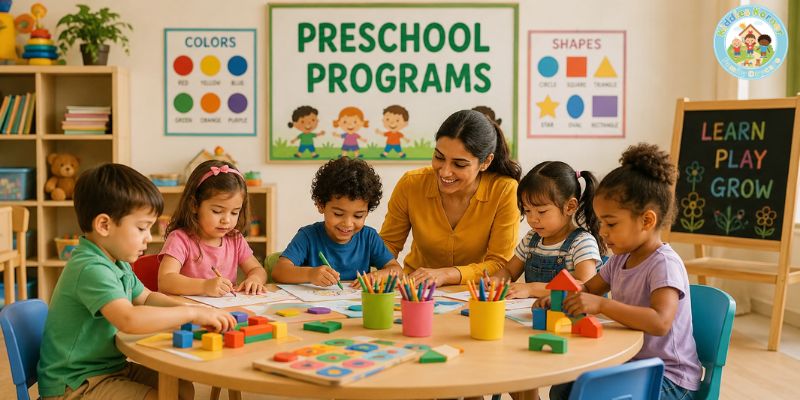
Selecting an appropriate early childhood program becomes one of the most challenging tasks a parent must face during this period of their child’s life. When deciding whether to enroll the baby in infant daycare, toddler daycare, or a preschool program, it is crucial to know what differences lie between the programs and which will suit the baby better.
It is a common misconception among parents that all types of daycares are basically similar and just differ by age groups. Actually, good early learning programs are tailored specifically to certain developmental milestones, learning goals, and emotional needs of particular age groups of children.
Scientific research in the field of child development proves that the first five years of a person’s life play the most significant role in forming their brain structure. According to the Center on the Developing Child at Harvard University, more than a million new connections in the brain of an infant occur every second.
In this guide, you will find a complete program comparison between newborn daycare, infant programs, toddler classrooms, and preschool programs.
Children develop in different ways during each period of their lives. The six-month-old baby acquires knowledge through sensory learning and interaction with the caregiver. The two-year-old toddler starts developing his/her independence, language abilities, and social awareness. On the other hand, pre-school children have structured learning to prepare them for school readiness.
All this implies that an appropriate program should change accordingly as children develop. The good early learning center not only monitors children, but it also assists in the development of cognitive, physical, emotional, and social abilities.
Age Range
Usually:
6 weeks to 18 months, based on local rules and policy of the center
Main Developmental Objectives
During the infancy stage, there will be a focus on:
Unlike other developmental stages, the focus during newborn daycare and infant child care will be on individual routines rather than on group activities.
Suppose an infant at six months old starts going to the daycare for the first time.
Instead of joining classes, the infant will spend most of the day doing things like:
The caregivers will attend to the feeding, sleeping, and comforting needs of the infants based on their own schedules.
One of the most popular queries asked by parents is the infant daycare daily routine. Unlike older children’s schedules, the infant daycare program remains flexible according to individual needs.
The daycare caregivers obtain details about feeding, sleeping, and health from the parents.
The activities in which the infants engage are:
The feeding time is different for each child according to their needs.
The sleeping time of infants varies greatly.
Some centres incorporate age-appropriate outdoor activities that develop children’s senses as well as give them some fresh air.
Infants learn through caregivers’ singing, storytelling, and talking with them.
This activity helps children learn how to communicate verbally as well as think.
Usually:
18 months to 3 years
Beginning toddler daycare is a big developmental step for children. They start developing independence, communication skills, and interacting with others.
Toddler programs usually concentrate on the development of:
At this age, children become very curious about their environment and everything surrounding them.
A two-year-old goes to daycare and notices a group activity that includes building with blocks. In contrast with infants who mostly observe their environment and explore things by themselves, toddlers start cooperating with other children and learning cause and effect.
Toddler programs usually provide greater structure compared to infant programs yet still allow flexibility.
Daily Activities May Consist Of-
Purposeful activities are planned with the aim of fostering children’s ability to communicate and be independent.
Such skills will help toddlers be ready for further education.
Usually:
3 to 5 years
The aim of the high-quality preschool program is to provide more structured educational experience but preserve a play-based approach to education.
This program doesn’t copy the kinder experience but rather develops the skills needed for future educational process.
Pre-school programs focus on:
An example of a project for children in a preschool can be a scientific project on plants. Observation of the seeds, discussion of the growth process, drawing of observations, and counting of leaves are involved in this single activity. Learning experiences in the preschool programs can be best achieved through play and exploration.
| Program Type | Primary Focus | Learning Style | Routine Structure | Key Skills Developed |
| Infant Daycare | Security, attachment, and sensory development | Individualized interactions | Flexible and child-led | • Trust• Sensory awareness• Motor development• Early communication |
| Toddler Daycare | Independence and social development | Guided exploration | Moderately structured | • Language development• Social interaction• Self-help abilities• Problem-solving |
| Preschool Program | School readiness and cognitive growth | Play-based learning with structured activities | Highly organized | • Literacy foundations• Numeracy concepts• Critical thinking• Emotional regulation |
One of the biggest myths surrounding childcare programs is that children just ‘age up’ to the next room. The truth of the matter is that each age represents a significant milestone in development.
For infants, responsive and attentive care is crucial for success.
Toddlers learn by doing and interacting with the world around them.
Young preschoolers benefit from challenges and learning new and increasingly difficult things. Understanding these changing needs can help you determine if your program is age-appropriate.
Most parents consider academics first when considering childcare centers. But social-emotional learning is just as important. There is evidence to suggest that kids who have good self-control and social skills have an easier time adjusting to school.
Programs for early learning teach children:
This helps them well past their time in preschool.
Every child grows at his or her own rate.
And the perfect program will depend on:
In addition to facilities or materials used in the classroom, parents should consider the interaction between teachers and children. It’s one of the best measures of quality.
Choosing between infant daycare, and a preschool program involves more than selecting a classroom based on age. Each stage serves a distinct purpose in supporting children’s cognitive, social, emotional, and physical development.
A thoughtful program comparison reveals how newborn daycare, infant child care, toddler programs, and preschool education build upon one another to create a strong foundation for lifelong learning. By understanding the unique goals, routines, and developmental priorities of each program, parents can make confident decisions that support their child’s growth during these critical early years.
Whether you’re exploring a toddler daycare daily routine or evaluating preschool readiness, the best choice is one that aligns with your child’s current needs while nurturing their future potential. Kiddies Korner can be a great space for your child if you are looking for daycare.
Infant daycare focuses on attachment, sensory development, feeding, and individualized care, while toddler daycare emphasizes language development, independence, social interaction, and guided exploration.
Most newborn daycare or infant child care programs accept babies from around 6 weeks of age, depending on local regulations and centre policies.
An infant daycare daily routine usually includes feeding, naps, sensory play, tummy time, story sessions, music activities, and one-on-one caregiver interactions based on each baby’s needs.
Toddler daycare programs support language development, social skills, emotional regulation, motor skills, independence, and problem-solving through play-based learning activities.
The primary goal of a preschool program is to prepare children for school by developing literacy, numeracy, communication, critical thinking, and social-emotional skills.
Design & Developed by Alpha Business Designs